By: Carlos Castro
The night I discovered Amelia, between her yellow star blankets, protected by the maternal warmth of her room with subtle lights and lulled by the sound of lullabies that almost managed to replace the arms of a father and mother, it was raining.
It was the only cold night that spring – in many ways.
For some reason, I had finished my work early. The older children finished their dinner in the huge and noisy dining room. Some had already collected their plates and went down the stairs and out to their small houses, scattered throughout the forest. They would take a bath, finish homework, perhaps, and go to sleep in their collective bedrooms.
I walked, enjoying the breeze, but exhausted by so many emotions that I had been feeling since the morning. I needed something different to think about. And so, wandering, I found Amelia.
Before we get to that meeting, I must tell you about the big question. Because in that orphanage, remodeled from an old farmhouse, there was a question that all of us who worked there had been exposed to.
From time to time, a boy or girl would approach one of the workers for whom they had developed a certain affection. With a poem scribbled on a sheet of notebook paper in one hand, in the other they clasped a toy that had survived several harrowing moves. Or perhaps they came with hands empty and nothing more than the need for love. Then, the child would nervously ask the question:
“Do you want to be my parent?”
By nodding, one instantly transformed into something extravagant. We stopped being the doctor, the psychologist, or the graduate, and abruptly rose in professional rank to the title of “dad” or “mom.”
From that moment on, of course, we had to act according to that new title.
When I entered the crib area that night, I was struck by the silence. There was noise, to be sure, but there was an absence of commotion, something rare in those days.
Doña Lucía, an expert in the gift and art of loving other people’s babies, was tucking in little Amelia. She had to change six or seven more diapers, but she poured all her tenderness into each baby. As if welling up from an internal source, she had reservoirs of affection and patience. It was as if she had eaten a book of lullabies, and their notes flowed out in delicate streams through her smiling lips.
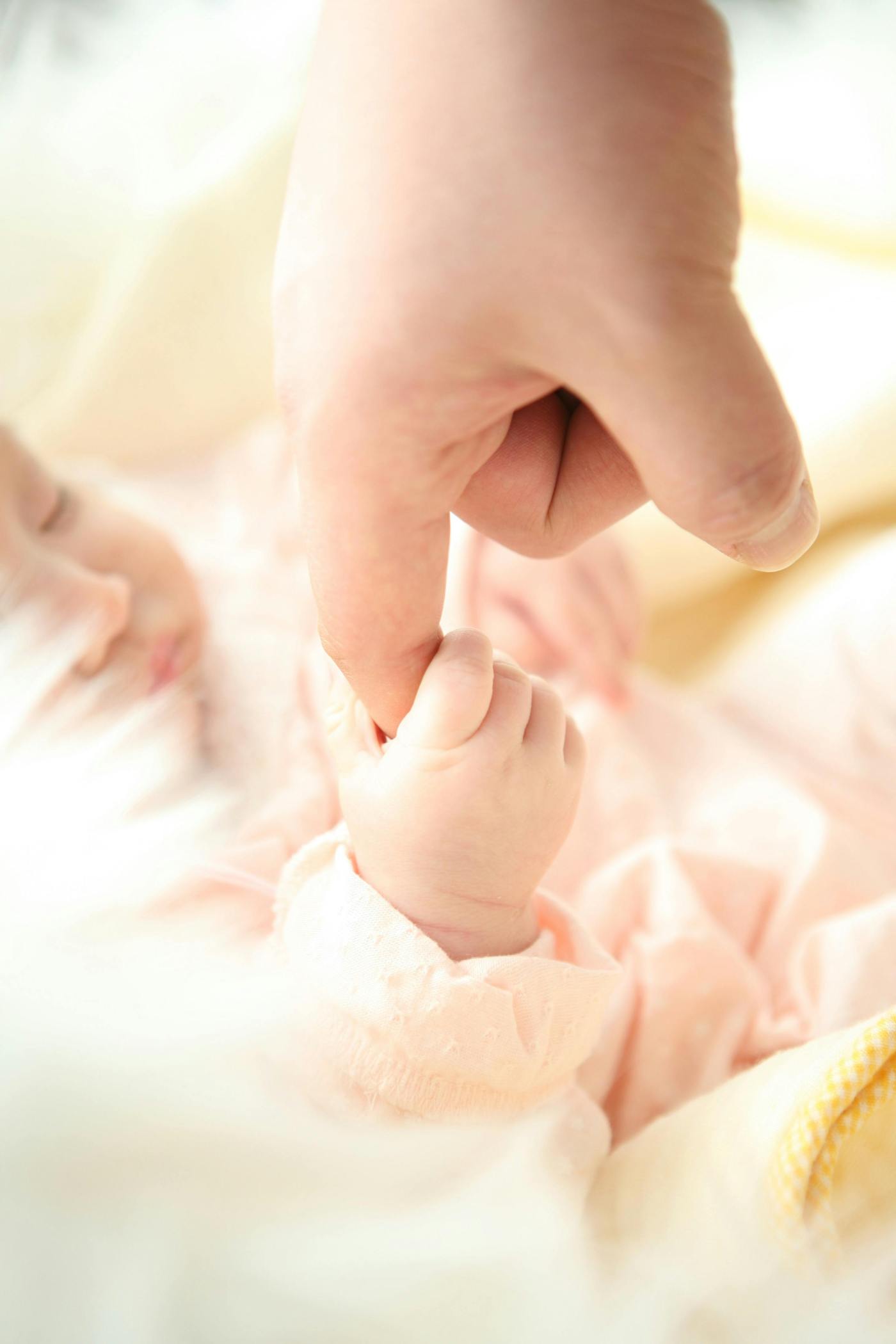
Amelia smiled at me. I lifted her into my arms. As I caught the scent of baby powder, Doña Lucía patiently taught me how to hold her.
“This is Amelia, and she still doesn’t have a dad,” the one who would be my mentor for the next few months told me.
And how could she already have a dad, if at just a few months old she couldn’t ask anyone the question, the magic question: the question that the other children could ask at any time?
“I’m going to be her dad.” I told my coworker, under that little light that kept the nightmares at bay.
“I’m going to be your dad,” I told Amelia, feeling the fragility on my chest, from her soft breathing.
From that moment on, I arrived at the forest earlier every day. I ran to attend to my chores, I did everything so that, at least at bedtime, Amelia would have a father. I learned to change her diapers, and she learned to smile at me. I loved her little hands, and she was fascinated by my beard. I fed her and she looked into my eyes, and for that moment, the day was worth it.
I think that we, so human, so full of evil, could never in our own strength ask God the question. Knowing that, He responded to our needs.
“I’m going to be your dad,” He tells us.
“I’ll change your diapers so you can smile at me. Even in your clumsiness, I will love you with everything in me so that you will be fascinated by my power. I will give you the true food you need so that you can look me in the eyes, and so I will know that the day of the cross was worth it.”
*Carlos Castro has a Masters in Psychotherapy and is an athlete and author. Together with his INMERSO team, they motivate and train evangelists and church planters in Mexico.
 Transform the Globe
Leave a comment