
Recently Global Nazarene Missions International (NMI) highlighted our wonderful region. I thought it would be great to share some of the information about our 10 amazing countries!
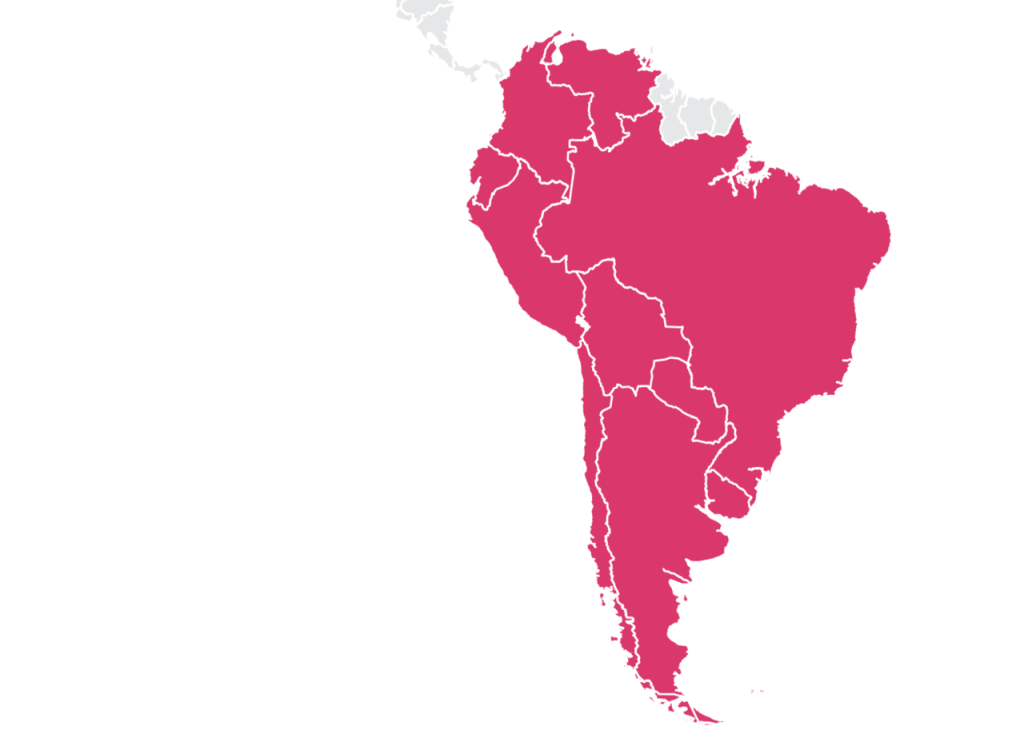
The South America Region is comprised of four fields: Andes North (Colombia – entered in 1975, Venezuela – 1982, and Ecuador – 1972); Andes Central (Peru – 1914 and Bolivia – 1945); Southern Cone (Argentina – 1919, Chile – 1962, Uruguay – 1949, and Paraguay – 1980); and the sub-region of Brazil (Brazil – 1958). Spanish is the predominant language of nine countries, with Portuguese as the official language of Brazil. The Church of the Nazarene established work in Peru in 1914, the first official work in South America, and continued to open new works and register in new countries from the mid-1940s through the 1980s. There is a strong missions focus in South America, with many missionaries from that region serving around the world. This passion is felt in every generation and is finding new expressions of missions service and opportunities for young people who sense a call to serve through missions.
Statistics:
- 322,431 Members
- 2,495 Organized Churches; 437 Not Yet Organized Churches
- 2,035 District Licensed and 2,038 Ordained Ministers on 83 Districts
- 73 Missionaries come from the South America Region; 93 Missionaries serve on the South America Region
Prayer Requests:
- Pray that God’s calling would remain alive in the hearts of the youth that were a part of KALEO, the Regional Youth Congress in August.
- Pray for churches, pastors, and leaders who accompany young new pastors and missionaries as they begin their ministerial journey.
- Pray for the church planting process in South America, which will focus on cities that do not yet have a Church of the Nazarene.
Praises:
- Praise the Lord for the doors that were opened to the more than 2,500 youth from South America who were part of Kaleo.
- Praise the Lord for the many who are training for ministry and missions through the ministerial education programs of the South America Region.
 Transform the Globe
Leave a comment